
10 Wedding Band Mistakes to Avoid for an Unforgettable 2026 Celebration
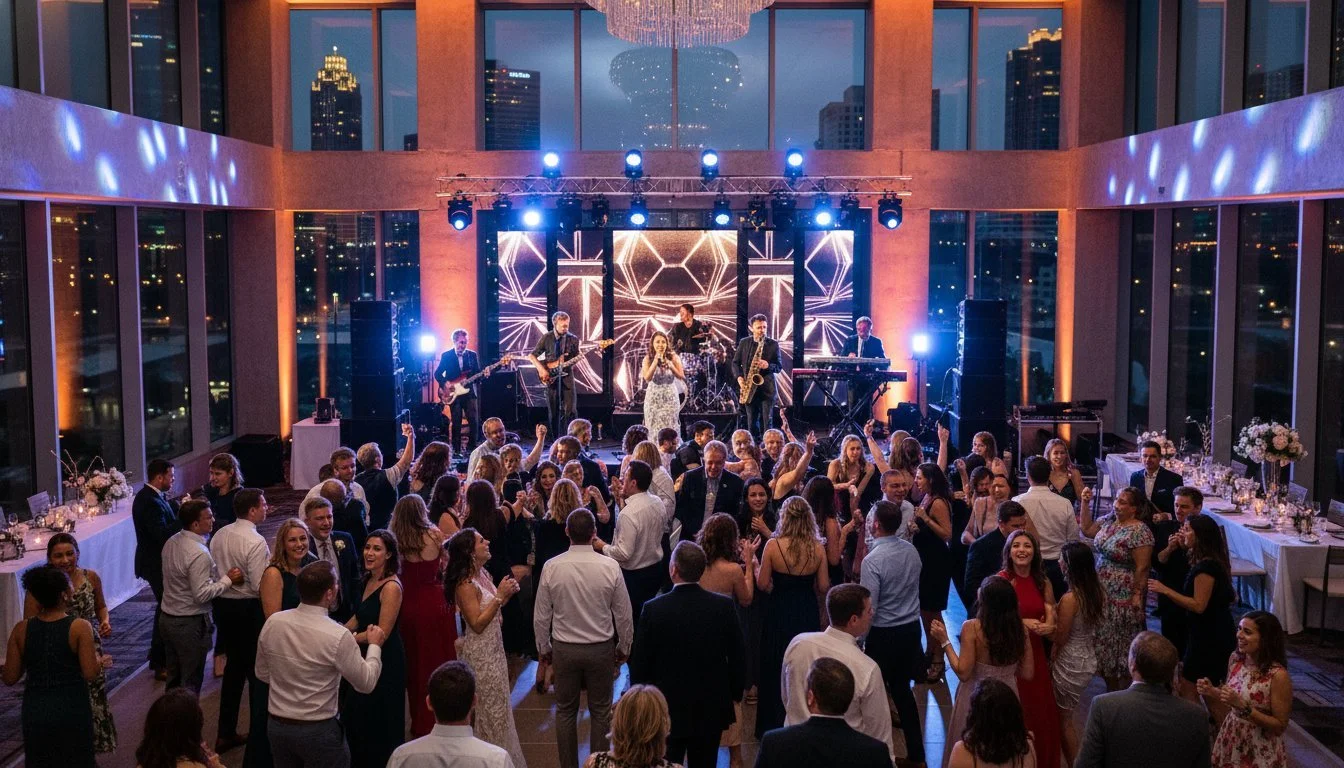
Picture your reception on a Saturday evening in June 2026. The toasts are over and the room is glowing, yet the dance floor remains empty because the band's sound quality is thin and their energy feels forced. According to a 2023 survey by The Knot, entertainment is the top element guests remember, yet many couples still fall into common traps that derail their celebration. Understanding the specific wedding band mistakes to avoid is the difference between a lackluster evening and a truly remarkable night that your guests will talk about for years.
You deserve to feel confident that your entertainment partner will handle every technical detail with professional grace. It's natural to worry about hidden production fees or unprofessional behavior when you should be focused on the joy of the moment. We promise to provide you with a clear roadmap to navigate the hiring process, ensuring your music is as curated and sophisticated as the rest of your wedding vision.
This guide explores ten critical pitfalls, including technical oversights and repertoire errors, to help you hire a band that guarantees a high-energy, seamless reception.
Key Takeaways
Understand why the band is your reception's emotional engine and how to bridge the "vibe gap" to keep every generation on the dance floor.
Learn the most common wedding band mistakes to avoid when planning your setlist, ensuring your personal favorites don't accidentally drain the room's energy.
Master the technical essentials, from venue power requirements to acoustic matching, to ensure your band’s sound is sophisticated rather than overwhelming.
Discover why detailed contracts and rider reviews are non-negotiable for a seamless, stress-free performance that protects your investment.
See how a curated partnership approach transforms standard booking into a professional production that guarantees an effortless, unforgettable celebration.
Table of Contents
Why Your Wedding Band Choice is the Emotional Engine of Your Reception
Common Musical Pitfalls: From Rigid Setlists to Genre Mismatches
The Technical Oversights: Sound, Lighting, and Staging Errors
Logistical Blunders: Contracts, Timelines, and Vendor Coordination
Why Your Wedding Band Choice is the Emotional Engine of Your Reception
Your wedding band is the heartbeat of your celebration, acting as the primary driver of guest energy and atmosphere. It's the difference between a dance floor that stays packed until midnight and a room that clears out early. One of the most common wedding band mistakes to avoid is treating your entertainment as a background service rather than the engine of the event. The role of wedding music has evolved significantly, moving beyond simple ceremonial accompaniment into a sophisticated, live performance that dictates the emotional arc of the night.
Live music creates a psychological impact that recorded tracks simply cannot match. The physical resonance of live instruments and the charisma of a lead singer create a biological response in guests, fostering a sense of shared experience. In 2026, trends are shifting away from generic wedding singers toward curated experiences that feel like private concerts. This evolution is driven by a desire for authenticity. A mismatched band creates a vibe gap where older guests feel alienated by excessive volume or younger guests feel disconnected from an outdated repertoire. A professional ensemble bridges this gap, ensuring every generation feels invited to the celebration.
The Difference Between a "Bar Band" and a Professional Wedding Band
A local favorite bar band might sound incredible at a neighborhood pub, but weddings require a specialized skill set. Professional wedding bands act as your partner for live music and production, handling complex tasks like emceeing, managing the reception timeline, and reading the crowd's energy in real time. Bar bands often lack the experience to navigate the logistical nuances of a high-stakes private event. Professionalism in this context means having the sophistication to steer you clear of every potential pitfall, from awkward transitions to technical audio failures that could disrupt your cherished moments.
The High Cost of the "Cheap" Option
Opting for a low-budget band often introduces hidden stressors that can jeopardize your peace of mind. Many budget-friendly groups operate without liability insurance or professional backup equipment, leaving you vulnerable if a piece of gear fails or a musician falls ill. Managing unvetted musicians on your wedding day adds a layer of work that should be handled by experts. Professional groups invest in redundant systems and high-end production to ensure the night remains enchanting and seamless. Hiring an agency-backed band is the definitive, stress-free solution for ensuring your entertainment is executed flawlessly and with flair.
Common Musical Pitfalls: From Rigid Setlists to Genre Mismatches
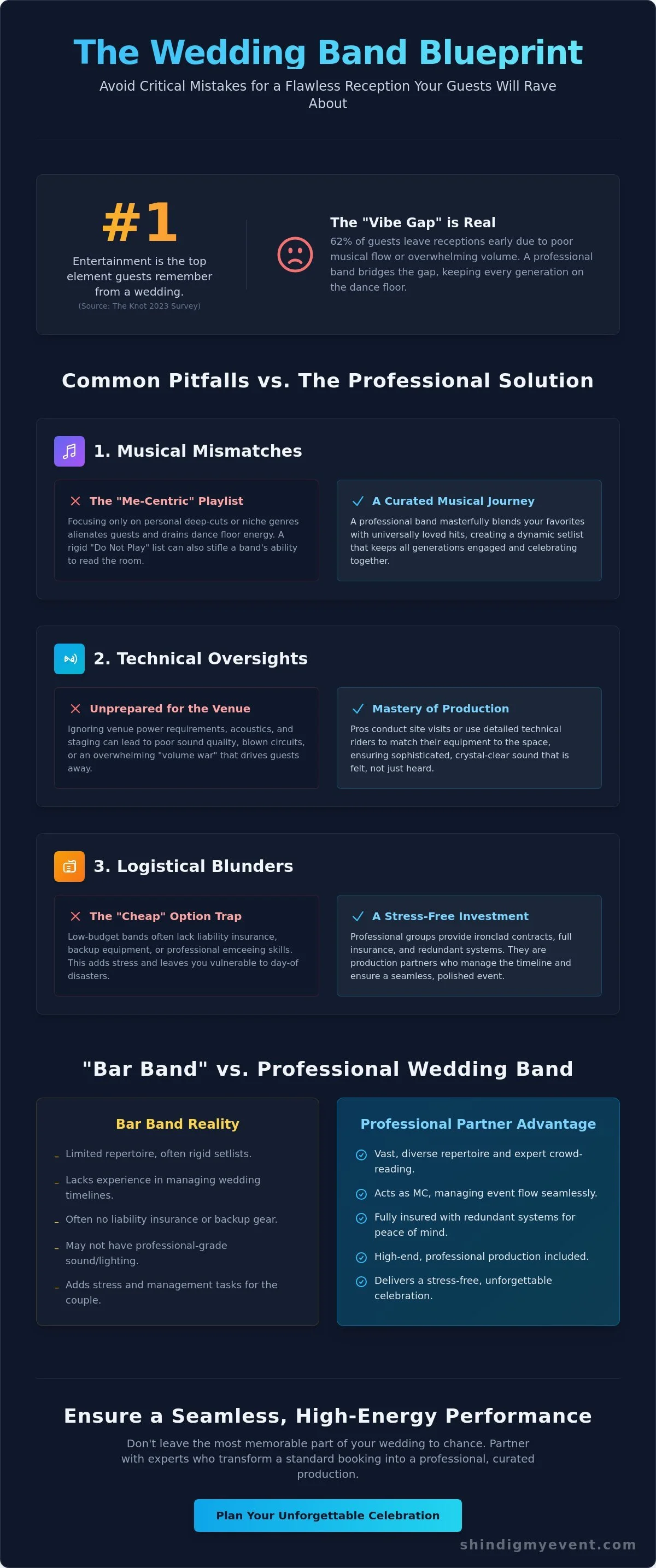
Your wedding music should feel like a curated journey, not a random shuffle of your personal Spotify likes. One of the most frequent wedding band mistakes to avoid is the "me-centric" playlist. While your affinity for 90s deep-house or obscure indie tracks is valid, a 200-person guest list usually requires a broader appeal to keep the dance floor packed. Professional ensembles understand how to blend your favorites with universal hits that bridge the generational gap. If the music only caters to the couple, you risk alienating half the room before the cake is even cut.
Energy management is equally vital. Poor song sequencing can drain a room's momentum in seconds. A 2023 study by wedding industry analysts found that 62% of guests cited excessive volume or poor flow as their primary reason for leaving a reception early. If your band treats every set like a stadium concert, your older relatives will likely retreat to the lobby to find a quiet space for conversation. A sophisticated band leader monitors the "Volume War," ensuring the music is impactful on the dance floor but allows for comfortable socialization at the perimeter tables.
Don't overlook the importance of the MC role. Your band leader acts as the night's director; if they can't manage a timeline or make clear, professional announcements, the evening's rhythm will stall during transitions. When reviewing your wedding band contract checklist, ensure that MC duties and sound equipment specifications are clearly defined to avoid these logistical headaches. If you want a team that prioritizes quality control and keeps the energy high, let's chat about your vision for a seamless celebration.
The Mistake of the Rigid "Do Not Play" List
A "Do Not Play" list helps define your taste, but micromanaging every track prevents the band from reading the room. If a specific genre is fueling the energy, a skilled band needs the flexibility to stay in that pocket. Provide a list of 10 to 15 "must-plays" and allow the professionals to handle the sequencing. This balance ensures the vibe stays high without sacrificing your personal style. Trusting the talent to pivot when they see the dance floor thinning is the hallmark of an effortless event.
Failing to Vet the Actual Lineup
The "bait and switch" is a real concern for many couples. Industry reports from 2024 suggest that nearly 15% of couples experience an unannounced lineup change between booking and their wedding day. Ask specifically if the performers in the promotional videos are the same ones who will be on stage. Instrumentation also matters; a 4-piece band cannot replicate the rich, layered sound of a full horn section. Always inquire about quality control standards for "sub" musicians to ensure the performance remains enchanting and professional.
The Technical Oversights: Sound, Lighting, and Staging Errors
Your wedding band's performance relies on more than just musical talent. Technical logistics often determine whether a night feels like a curated concert or a chaotic rehearsal. One of the most common wedding band mistakes to avoid is the "Power Trip." A professional 10-piece band often requires 40 to 60 amps of dedicated power across multiple circuits. If your venue only offers a single 15-amp outlet, you risk a total blackout during the first dance. Always verify the electrical capacity with your venue manager before finalizing your floor plan.
Acoustics play an equally vital role in the guest experience. A high-energy band in a small room with floor-to-ceiling glass creates an acoustic nightmare. Sound bounces off hard surfaces, creating a reverb time that can exceed 2.5 seconds. This turns your favorite songs into a muddy wall of noise that drives guests toward the exit. Similarly, skipping the stage is a visual and sonic error. Elevating the band even 12 to 18 inches allows sound to travel over the heads of the front row. It ensures guests at the back of the room feel the energy and see the performance clearly.
Lighting should never be an afterthought. A dark stage makes even the most sophisticated ensemble look unprofessional in your wedding photos. Proper stage wash ensures your performers are visible, adding to the celebratory atmosphere you've worked hard to create. Without it, your band becomes a "black hole" in the corner of the room, failing to draw guests to the dance floor.
Pro Production vs. DIY Sound
Many bands offer a "small PA" system they manage themselves, but this often lacks the clarity needed for a premium event. Professional sound reinforcement involves a dedicated engineer who monitors the mix in real-time. They understand that "loudness" isn't the same as "clarity." High-end equipment, like Shure ULX-D wireless systems, ensures that every word of the ceremony and speeches is crystal clear. This level of production turns a standard performance into a seamless, high-class experience that respects your guests' ears.
Venue Coordination Failures
Logistics can make or break the flow of your day. A common failure is poor load-in timing. If your band arrives only 60 minutes before the reception, they'll be sound-checking while your guests enjoy cocktails. We recommend a 3-hour setup window to keep the "behind-the-scenes" work invisible. Also, remember the rider requirements. Most professional contracts include a "vendor meal" for each member and a private green room. Partnering with a dedicated production expert ensures these technical details are handled, leaving you to enjoy an effortless, unforgettable night.
Logistical Blunders: Contracts, Timelines, and Vendor Coordination
Logistical failures can quiet a dance floor faster than a bad song choice. One of the most common wedding band mistakes to avoid is relying on a "handshake deal" or a vague email thread. Without a detailed contract, you lack protection against sudden lineup changes or equipment failures. For a 2026 celebration, your contract must be ironclad. It needs to specify exact load-in times, soundcheck windows, and a clear cancellation policy. Post-2020, force majeure clauses are essential to protect your investment from unforeseen global events or local mandates.
Ignoring the performance rider is another critical error that creates unnecessary friction on the wedding day. This document isn't about "diva" requests; it's about the technical fuel for the performance. Most professional bands require dedicated 20-amp circuits to prevent power surges that could shut down the entire stage. They also need basic hospitality like plenty of water and hot meals to sustain their energy through a four-hour event. A performance rider is a vital logistical document that outlines the technical and hospitality requirements necessary for the band to execute their show successfully.
Timeline compression often kills the party vibe before it starts. Expecting a band to build momentum in a single 45-minute set is unrealistic. High-energy sets usually require 60 to 75 minutes to peak and keep guests engaged. Additionally, you must verify the band's liability insurance. Most premium venues in 2026 require a $1 million or $2 million COI (Certificate of Insurance) before any vendor steps on-site. Hiring an uninsured group is a wedding band mistake to avoid that could lead to your event being shut down by the venue manager hours before the first dance.
What Should Be in Your Wedding Band Contract?
Your agreement should detail specific start and end times, precise overtime rates, and a breakdown of the ensemble size. Ensure it covers travel fees and lodging if your venue is more than 50 miles from the band's home base. A clear force majeure clause should account for government mandates or extreme weather to ensure your deposit is handled fairly. These details transform a simple booking into a professional partnership.
The Communication Breakdown
Seamless events happen when your band leader and wedding planner sync up early. Don't wait until the week of the wedding to introduce them. Confirm final details, such as the first dance song version and final timeline, at least 30 days out. On the big day, designate a "Day-of" contact like a trusted bridesmaid or professional coordinator. This person handles quick questions so you can stay present and enjoy the music.
Ready to work with a team that handles every detail for a seamless performance? Connect with our consultants today.
How to Ensure a Seamless Performance with Shindig My Event
Choosing the wrong entertainment is one of the most common wedding band mistakes to avoid, but we've built a system that makes failure impossible. The Shindig Difference begins with our curated roster. Unlike massive booking directories that prioritize quantity, we only represent a handpicked selection of elite artists. This vetting process ensures that every group on our list possesses the musicality, stage presence, and professionalism required for a high-stakes 2026 celebration. You won't find "bad bands" here; you'll only find performers who know how to command a room.
We operate as your event production consultant rather than a simple booking agency. This distinction matters because a great band can't shine without professional support. Every Shindig engagement includes high-end sound and lighting production as a core service. We manage the technical logistics, load-in schedules, and power requirements so you can focus on your guests. Whether you're eyeing Atlanta favorites like the high-energy Forever Young or the soul-infused sounds of GetDownTown, our team ensures the audio is crisp and the visual atmosphere is enchanting.
Tailoring the Vibe to Your Vision
Your wedding should sound like you, not a generic playlist. We take your specific instrumentation preferences and favorite genres into account during the selection process. Matching a band to an Atlanta venue is a specialized skill. A group that sounds perfect in the industrial space of The Westside Warehouse might require a different setup for the acoustics of The Swan House. We've mastered these nuances over hundreds of successful events.
Consider a recent event where a sudden power restriction at a historic venue threatened to silence a 10-piece brass ensemble. Because we act as production partners, our team had silent, high-capacity battery backups ready within 12 minutes. We turned a potential logistical nightmare into a cherished moment where the band played an unplugged set under the stars while the power was rerouted. That's the level of reliability we bring to your wedding.
Your Next Steps to an Effortless Shindig
The calendar for 2026 is already filling up. Top-tier talent is often secured 18 to 24 months in advance, making early booking critical to securing your first-choice ensemble. Waiting too long is another one of those wedding band mistakes to avoid that can leave you settling for second-best. We invite you to schedule a consultation where we can tune into your vision and discuss the specific energy you want for your reception.
Identify your preferred musical styles and "must-play" songs.
Review live performance footage of our curated Atlanta talent.
Confirm your venue's technical requirements with our production team.
Secure your date with a professional, transparent contract.
We're ready to help you create an atmosphere that your guests will talk about for years. Let’s chat about your wedding music!
Secure Your 2026 Dance Floor Legacy
Your wedding music is the vital engine that drives your reception's emotional energy from the first dance to the final exit. Avoiding common wedding band mistakes to avoid, such as overlooking technical staging requirements or failing to sync vendor timelines, ensures your 2026 celebration remains flawless and vibrant. We specialize in managing these complex logistics and technical details so you can focus on the joy of the moment.
Shindig My Event is a trusted partner for elite institutions like the City of Atlanta and Emory University, bringing a professional standard of excellence to every stage. We offer a curated roster of elite performers like the band Forever Young, and every booking includes full service sound and lighting production as a standard feature. This comprehensive approach guarantees a seamless performance that feels both sophisticated and entirely effortless for you.
Book your curated 2026 wedding band with Shindig My Event today!
We're ready to help you craft an enchanting atmosphere that your guests will cherish forever.
Frequently Asked Questions
What is the biggest mistake couples make when hiring a wedding band?
The biggest mistake is over-restricting the band's repertoire by providing an inflexible must-play list. While your personal taste is vital, 72% of professional planners note that restricting a band's ability to read the crowd often kills the dance floor energy. One of the top wedding band mistakes to avoid is failing to trust the expertise of your performers. They use their years of experience to pivot based on guest reactions in real-time.
Can I give my wedding band a specific list of songs to play?
You should provide a love and hate list rather than a full chronological setlist. Most bands request a list of 10 to 15 favorites and 5 do not play tracks. This allows the musicians to curate a seamless flow while respecting your style. For a 2026 celebration, focus on your top priorities. Let the band handle the transitions that keep 100% of your guests engaged on the floor.
How much power does a live wedding band actually need?
Most standard 4 to 8 piece bands require at least two dedicated 20-amp circuits to operate safely. This prevents tripped breakers when high-wattage amplifiers and lighting rigs run simultaneously. You should confirm these requirements with your venue manager at least 6 months before the date. Ensuring proper voltage prevents technical delays that could interrupt your curated musical experience or cause damage to professional sound equipment.
Should I hire a band and a DJ for my wedding reception?
Hiring both a band and a DJ provides a seamless transition between high-energy live sets and original recordings. This combination ensures that 100% of the evening has a curated soundtrack without any awkward silence during band breaks. A DJ can also handle specific genres like EDM that require the original production. Meanwhile, the band brings the sophisticated flair of live performance to your 5-hour reception.
What happens if a band member gets sick on my wedding day?
Professional entertainment agencies maintain a roster of vetted sub musicians who can step in with less than 24 hours' notice. These performers are trained on the specific arrangements and repertoire of the lead band to ensure a flawless transition. Having a backup plan is essential for a stress-free experience. It guarantees that the quality of your celebration remains high even if an unexpected illness occurs during your event.
How long does a wedding band typically play for?
A standard wedding band performance usually spans 3 to 4 hours of total time, typically divided into 45 or 60-minute sets. Most contracts include 2 or 3 short breaks where recorded music keeps the energy consistent. This structure aligns with the natural flow of a 5-hour reception. It allows guests to alternate between high-energy dancing and socializing during the scheduled intermissions to ensure no one gets exhausted.
Do I need to provide a stage for my wedding band?
A stage isn't always mandatory. However, a raised platform of 8 to 12 inches significantly improves visibility for guests at the back of the room. A standard 6-piece band generally requires a 12x16 foot performance area. If your venue doesn't have a built-in stage, renting one ensures your entertainment is the focal point. This setup helps the band project sound more effectively across the entire dance floor for a professional look.
Is it okay to ask the band to learn a special song for our first dance?
Most professional bands include one or two custom song requests as part of their standard booking package. You should submit these requests at least 60 days before the wedding to allow for rehearsals. Learning a unique song is a common way to personalize your celebration. Avoiding common wedding band mistakes to avoid means communicating these special requests early so the musicians can perfect the arrangement for your dance.