
Event Staging Basics: The Ultimate Guide to Professional Production in 2026
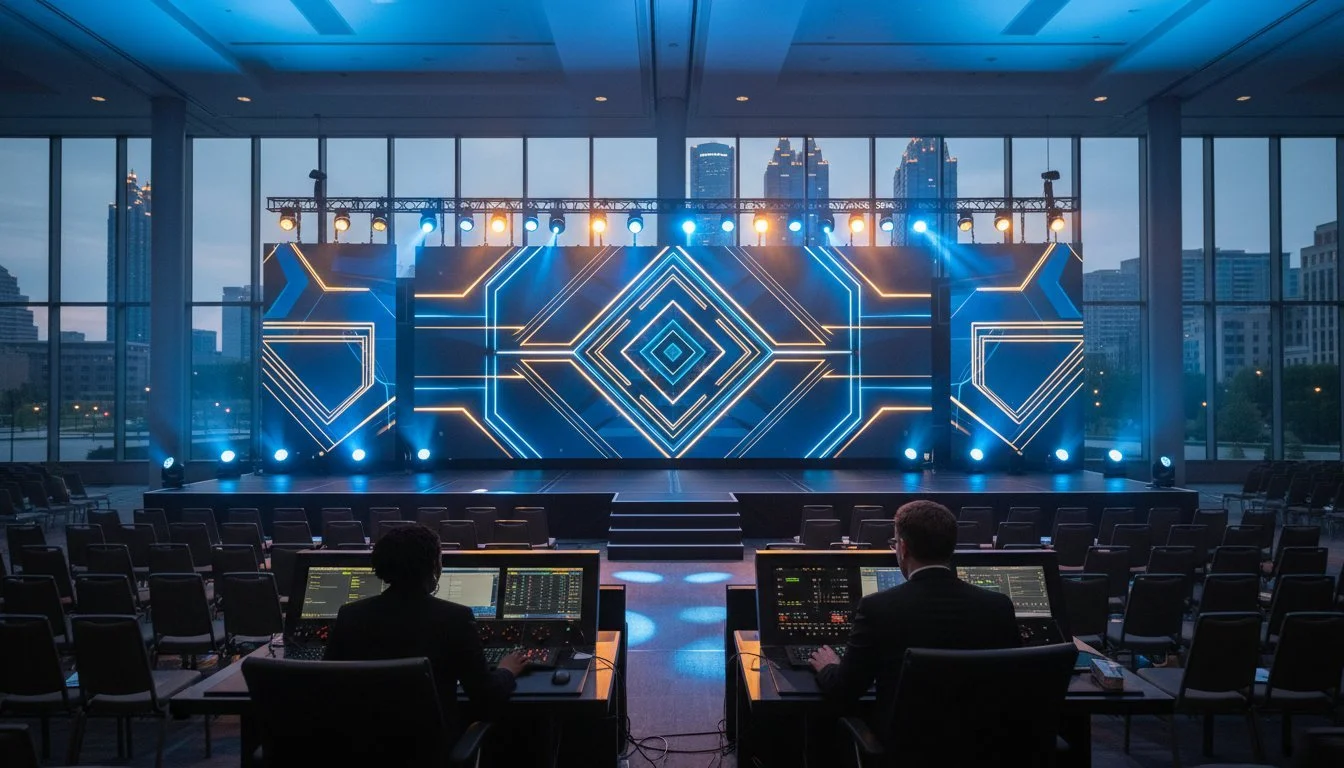
Our production crew doing what they do best.
The moment before the lights dim holds a universe of possibility-and a healthy dose of pressure. Will every technical cue land perfectly? Is the stage sized correctly for the performers without overwhelming the space? Most importantly, will the final look feel sophisticated and enchanting, or simply... empty? The fear of a production falling flat can overshadow the excitement of the event itself, but it doesn't have to be that way.
A truly remarkable performance is built on an impeccable foundation. As your partner in production, we're here to guide you through the essentials that make all the difference. Mastering the core event staging basics is the key to transforming any venue into a high-impact, professional space. In this ultimate 2026 guide, we will demystify everything from stage dimensions and sightlines to aesthetic choices, ensuring your setup is seamless, your performers are safe, and your guests are left with a single, lasting impression: wow.
Key Takeaways
Discover how to establish a clear "focal point" for your event, creating a center of gravity that directs guest attention and elevates the entire experience.
Master the technical side of event staging basics, from calculating the perfect stage size to guaranteeing enchanting sightlines for every single guest.
Learn to select the ideal stage layout to perfectly match your event's unique goals, whether for a formal presentation or a high-energy celebration.
Uncover the critical production logistics often overlooked, including the specific power requirements needed for a seamless, professional performance.
Table of Contents
What is Event Staging? Defining the Focal Point of Your Night
The Shindig Partnership: Effortless Production for Remarkable Events
What is Event Staging? Defining the Focal Point of Your Night
Event staging is far more than simply setting up a platform for your band. It is the art of creating a dedicated focal point for your celebration, a sensory hub where performance, lighting, and sound converge to craft an unforgettable atmosphere. Think of it as the gravitational center of your event; it naturally draws your guests' attention, directs their energy, and provides a polished, professional anchor for the entire evening. Understanding these event staging basics is the first step toward transforming a simple performance into a truly remarkable experience.
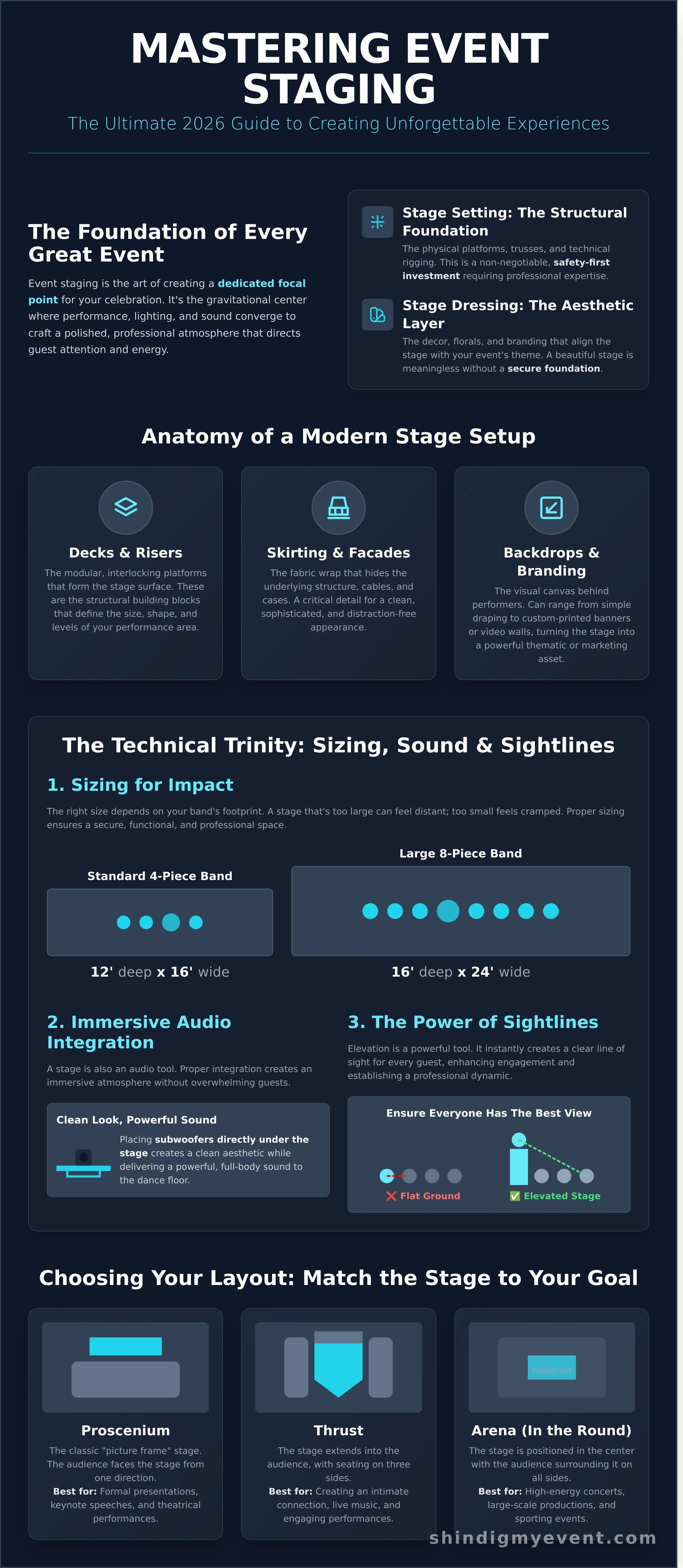
A common point of confusion is the difference between stage setting and stage dressing. The setting refers to the structural foundation-the physical platforms, trusses, and technical rigging. This is where professional expertise becomes a non-negotiable, safety-first investment. Proper construction ensures the security of performers and guests, preventing unforeseen accidents. Stage dressing, on the other hand, is the aesthetic layer: the decor, florals, and branding that align the stage with your event's theme. Both are crucial, but a beautiful stage is meaningless without a secure foundation built on the principles of professional Stagecraft.
The Psychology of the Stage
Elevation is a powerful tool. By raising your performers, you instantly create a clear line of sight for every guest, enhancing engagement and establishing a professional dynamic. This intentional framing helps craft those "cherished moments"-the first dance, the keynote speech, the encore-ensuring they are seen and felt by everyone. The right stage height directly influences the room's "vibe," channeling energy from the performers to the dance floor for a seamless and enchanting night.
Core Components of a Modern Setup
While every curated setup is unique, a professional stage is built from a few key components. Understanding these elements will help you communicate your vision and appreciate the details that create a flawless look.
Decks and Risers: These are the modular, interlocking platforms that form the stage's surface and create different levels. They are the structural building blocks that define the size and shape of your performance area.
Skirting and Facades: A simple yet critical detail, skirting is the fabric that wraps around the stage to hide cables, cases, and the underlying structure. This creates a clean, sophisticated, and distraction-free appearance.
Backdrops and Branding: The backdrop serves as the visual canvas behind the performers. It can be simple draping, a custom-printed banner with a corporate logo, or an elaborate video wall, turning the stage into a powerful thematic or marketing asset.
The Technical Trinity: Platforms, Sound, and Sightlines
Once you’ve decided a stage is right for your event, the next step is to tune into the technical details that transform a simple platform into a professional performance space. These considerations are the foundation of a seamless guest experience, ensuring the energy from the band reaches every corner of the room. Mastering these event staging basics is about creating a perfect harmony between what your guests see, hear, and feel.
It’s a curated balance. A stage that is too large can make a band feel distant, while one that’s too small can feel cramped and unprofessional. Likewise, a sound system that’s overpowering can ruin the sophisticated vibe you’ve worked so hard to create. Our goal is to find that perfect, enchanting sweet spot where every technical element works in concert to elevate the entire evening.
Sizing the Stage for Live Performance
The right stage size depends entirely on your band's footprint. You must account for the performers, their instruments, and essential gear like the "backline" (drum kits, amplifiers) and monitor wedges. Proper sizing is a crucial aspect of professional event safety and planning, providing a secure and functional space.
Standard 4-Piece Band: A 12' deep x 16' wide stage is a comfortable starting point.
Larger 8-Piece Band (like Forever Young): Requires at least a 16' deep x 24' wide footprint to accommodate a horn section, multiple vocalists, and a grander presence.
Remember to consider vertical space; clearance is the height between the stage floor and the ceiling or any hanging fixtures.
Acoustics and Audio Integration
A stage is also an audio tool. How we integrate sound is one of the most important event staging basics for creating an immersive atmosphere. Placing subwoofers directly under the stage can create a clean look and a powerful, full-body sound on the dance floor. To ensure guest comfort, we meticulously manage "stage bleed"-the sound spilling from the performers' on-stage monitors-to keep conversations possible away from the dance floor. A dedicated monitor mix for the band is non-negotiable; it allows them to hear each other perfectly, delivering the tight, polished performance your event deserves.
Choosing Your Layout: Proscenium, Thrust, and Arena Stages
Once you’ve established the need for a stage, the next step is choosing a shape that enhances your event’s atmosphere. This isn't just about logistics; it’s about strategically shaping your guests' experience. Understanding these event staging basics allows you to perfectly match the layout to your shindig’s goals, whether you're aiming for a formal presentation or an all-night dance party. The right stage design becomes an integral part of the decor and the evening's flow.
The Classic Proscenium: Best for Weddings and Galas
The proscenium is the most traditional stage, creating a "picture frame" that elegantly separates the performers from the audience. This layout cultivates a sophisticated, curated feel, focusing all attention on the entertainment. It’s the ideal choice for weddings and formal galas where the band is a featured showcase. The front-facing design simplifies lighting for a flawless look and allows for "wings" on either side, perfect for seamless transitions between speakers, awards, and musical acts.
Thrust and Runway Stages: Boosting Engagement
If your goal is to create an electric, high-energy vibe, a thrust stage is your greatest asset. By extending out into the audience, it breaks down the barrier between guests and performers, bringing the energy directly onto the dance floor. This layout makes a band's performance feel more like an intimate concert, creating an irresistible pull for guests to join the celebration. While technically more complex to light without affecting the audience, the payoff is a dynamic atmosphere perfect for high-energy corporate launches or fashion-forward events.
For the boldest corporate galas, a 360-degree arena stage (or "in the round") offers a truly unique experience. While it creates an unparalleled sense of intimacy, it comes with specific production considerations.
Pro: Every seat feels close to the action, fostering a communal and engaging environment.
Con: It demands a more complex audio and lighting setup to ensure a quality experience from all angles, and performers must be mindful of their orientation throughout the event.
Ultimately, selecting the right layout is a foundational part of event staging basics that ensures your entertainment doesn't just perform, but truly connects with your audience.
Planning and Logistics: The Atlanta Production Checklist
Atlanta offers a stunning collection of venues, from historic Buckhead ballrooms to modern industrial spaces on the Westside. Each presents unique opportunities and logistical challenges. A successful event hinges on mastering the details behind the scenes, turning potential pitfalls into a seamless, enchanting experience for you and your guests. This is where professional planning makes all the difference.
One of the most critical phases is the "load-in dance"-a carefully choreographed timeline between your venue, the band, and our production crew. We coordinate precise arrival times, access to loading docks, and efficient setup pathways. This focus on the fundamentals of event staging basics includes meticulous attention to safety and compliance, from respecting venue weight limits and fire codes to implementing clean cable management that ensures every guest can move freely and safely.
The Power of Preparation
A standard wall outlet is simply not enough for a professional band's sound and lighting rigs. To create that powerful, immersive atmosphere, we calculate the total amperage required and work with the venue to secure dedicated power circuits. This is non-negotiable for a flawless performance, preventing tripped breakers that could bring your unforgettable night to a sudden halt. Before booking, we help you ask the right questions.
What are the locations and amperage ratings of dedicated power tie-ins?
What are the specific load-in times and access points (e.g., loading dock, service elevator)?
Are there any restrictions on stage placement due to the venue's historic status?
Outdoor Staging in the South
Planning an outdoor affair in Georgia means preparing for its unique climate. The southern humidity can affect sensitive instruments and electronics, requiring professional-grade equipment and expert setup. To protect your curated atmosphere from the elements, we utilize properly secured, wind-rated tenting. Furthermore, ensuring a perfectly level and stable platform on a lawn or uneven terrain is one of the most crucial event staging basics for performer safety and a polished presentation. Mastering these details is how we make your celebration feel truly effortless. Let our team handle the production so you can enjoy the party.
The Shindig Partnership: Effortless Production for Remarkable Events
At Shindig My Event, we don’t just rent out stages; we build partnerships. We believe that exceptional production is the foundation upon which unforgettable moments are built, and that level of quality requires a collaborative, hands-on approach. This philosophy is why we integrate our curated music entertainment with our in-house production services, creating a seamless, stress-free experience for you from start to finish.
Our process begins with our seasoned consultants, who tune into your unique vision for the event. We guide you through the essential event staging basics, steering you clear of common pitfalls and ensuring every technical detail aligns perfectly with your aesthetic goals. This comprehensive management covers everything:
Initial venue walk-throughs and site inspections.
Custom stage, sound, and lighting design.
Flawless execution on the day of your event.
Complete coordination from setup to the final encore.
From the first site visit to the final "thank you" of the night, our team is your dedicated partner, ensuring every element is executed with precision and flair.
Curated Entertainment Meets Professional Production
There’s a powerful synergy when a band performs on a stage designed specifically for them. Our artists deliver more dynamic performances because the sound and lighting are perfectly dialed in. This is the "Shindig My Event Signature": a polished, professional, and celebratory atmosphere where production enhances the talent. For instance, our premier band GetDownTown utilizes professional staging to create an immersive concert experience, commanding the room and keeping the dance floor irresistible all night long.
Ready to Build Your Stage?
Navigating the world of event staging basics doesn't have to be overwhelming. When you partner with Shindig My Event, you gain more than just equipment; you gain the peace of mind that comes from having a team of dedicated experts manage every detail. Let us handle the logistics so you can focus on your guests and cherish every moment of your remarkable event. Let’s chat about your upcoming Atlanta event!
Your Partner in Flawless Production: Beyond the Basics
Mastering the art of event production begins with understanding that the stage is your event's heart. By defining a powerful focal point and carefully considering the technical trinity of platforms, sound, and sightlines, you transform a simple space into an immersive experience. These event staging basics are the foundation upon which unforgettable moments are built, turning logistical planning into a seamless execution that captivates your audience from start to finish.
While these principles guide the way, orchestrating a truly remarkable event requires seasoned expertise. As a trusted partner to the City of Atlanta Office of Cultural Affairs, Shindig My Event offers seamless, all-in-one entertainment and production management. We pair our technical proficiency with a curated roster of Red Dot-level musical talent to create a sophisticated and enchanting atmosphere for your guests. Ready to make your vision an effortless reality? Let’s Chat About Your Live Music + Production Needs and begin planning your unforgettable night.
Frequently Asked Questions
Do I really need a stage for a wedding band, or is the floor okay?
While the floor can work in intimate settings, a stage elevates the entire experience. It creates a professional focal point, improves sightlines for every guest, and gives the band a dedicated, safe space to perform. A stage transforms the music from a background element into a captivating main event, contributing to the unforgettable atmosphere you envision for your special day. It ensures the performance feels polished and truly remarkable.
How much does professional event staging cost in Atlanta?
In Atlanta, the cost for professional event staging varies based on size, height, and complexity. A standard 16’x12’ stage for a wedding band typically ranges from $800 to $1,500, including delivery, setup, and breakdown. For larger corporate events or outdoor setups that require specialized leveling and skirting, costs can increase. As your partner in production, we provide a detailed, transparent quote to ensure it aligns perfectly with your vision.
What is the standard height for an event stage?
The ideal height is a key component of event staging basics and depends on your venue and guest count. For most weddings and corporate events in ballrooms, a height of 12 to 24 inches is perfect. This elevation is enough to ensure visibility without feeling disconnected from the audience. For larger outdoor festivals or concerts, stages are often 36 to 48 inches high to provide clear sightlines from a distance.
How much power does a professional live band actually need?
A professional live band, complete with a full sound and lighting system, requires significant and dedicated power. Typically, a band needs at least two to three separate 20-amp circuits located near the performance area. This prevents tripped breakers and ensures a clean, uninterrupted audio signal. It's a critical detail we manage to guarantee a seamless production, steering you clear of any potential technical pitfalls on your event day.
How long does it take to set up a professional stage and sound system?
For a standard indoor event, setting up a professional stage, sound system, and lighting typically takes our expert crew between three and five hours. This allows for meticulous placement, comprehensive sound checks, and seamless coordination with your venue. We always schedule our arrival to ensure everything is flawless and ready well before your first guest arrives, creating an effortless and enchanting experience for you and your guests.
Can you build a stage on an uneven outdoor surface?
Absolutely. Our professional production services include specialized, adjustable stage decking systems designed to create a perfectly level and secure platform on grass, slopes, or other uneven terrain. Our experienced team conducts a site visit to assess the ground and engineer a safe, stable solution. This ensures your outdoor event has the same polished and sophisticated foundation as any indoor celebration, regardless of the location.
What is a stage "rider," and why does my band have one?
A stage rider, or technical rider, is a document that outlines a band's specific production requirements to deliver their best performance. It covers everything from stage size and power needs to the exact sound and lighting equipment required. It’s an essential communication tool that allows us, as your production partner, to execute the band’s vision flawlessly and ensure every technical detail is handled for a truly seamless show.
How do I ensure everyone in the back of the room can see the stage?
Ensuring great sightlines is crucial for an immersive guest experience. The first step is selecting the appropriate stage height-typically 18-24 inches for a standard ballroom-and placing it in a location without obstructions like columns. For very large rooms or corporate events, we can incorporate large video screens for Image Magnification (IMAG), bringing a close-up, dynamic view of the performance to every single guest, no matter where they are seated.