
Hidden Costs of Hiring a Wedding Band: The 2026 Budgeting Guide

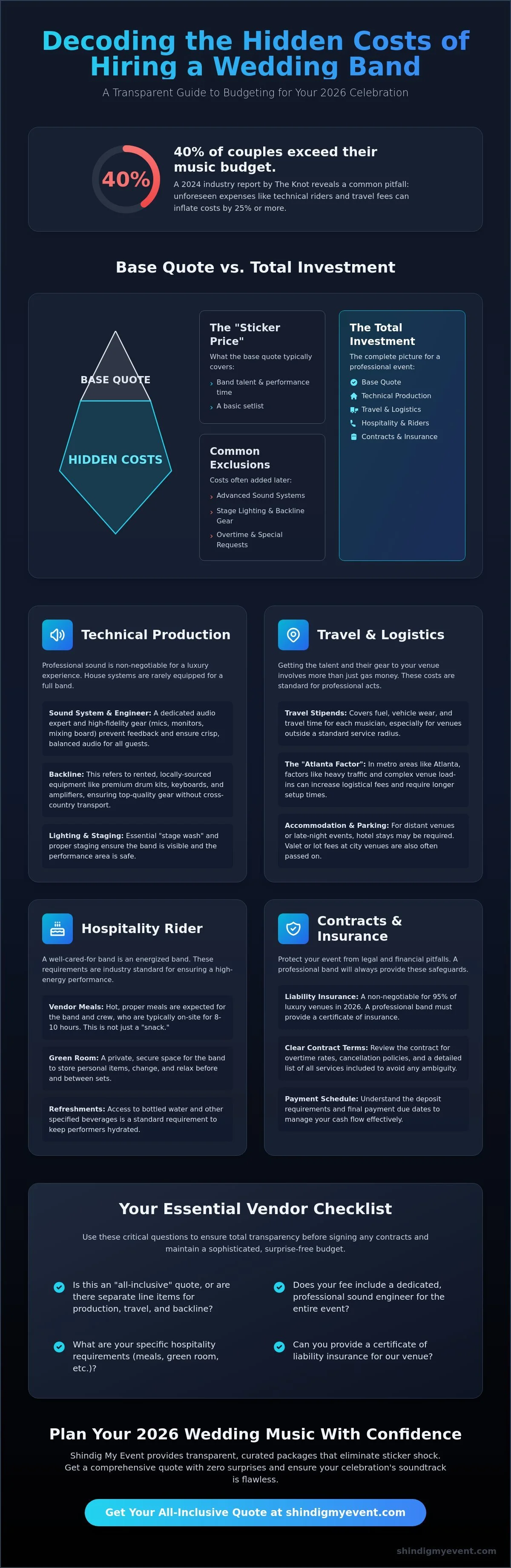
In June 2024, a couple in Atlanta discovered that their $5,000 music budget actually required an additional $1,250 to cover technical riders and travel fees they hadn't anticipated. According to a 2024 industry report by The Knot, 40% of couples exceed their initial budget because of these unforeseen expenses. It's a stressful realization that can dim the excitement of your big day. You've likely spent hours searching for the perfect ensemble to create an enchanting atmosphere, only to find yourself confused by the hidden costs of hiring a wedding band.
We agree that your planning process should feel sophisticated and effortless, not like a series of unpleasant surprises. This guide ensures you can budget with total confidence and zero surprises. We'll provide a transparent look at professional production requirements, a checklist of essential questions for your vendors, and a clear path to a seamless booking experience for your 2026 celebration. You'll learn how to decode technical jargon like backline and sound riders so your music sounds as curated and professional as your vision demands.
Key Takeaways
Learn to distinguish between a base performance quote and your total investment to ensure your budget remains sophisticated and surprise-free.
Discover why professional sound reinforcement and a dedicated engineer are essential for maintaining a seamless, high-end atmosphere throughout your celebration.
Master the logistics of travel fees and the unique "Atlanta Factor" to account for the hidden costs of hiring a wedding band before signing any contracts.
Understand the "Hospitality Rider" and vendor meal standards to properly sustain your talent for an effortless, high-energy performance.
Identify critical contract red flags and insurance requirements that protect your curated event from unforeseen legal or financial pitfalls.
Table of Contents
Beyond the Performance: Defining Base Quotes vs. Total Investment
Booking live music for a 2026 wedding involves more than just selecting a setlist. Most couples start their journey by requesting a quote, only to find that the initial number rarely covers the full scope of the evening. A base quote typically accounts for the "talent" and their specific performance time on stage. However, the hidden costs of hiring a wedding band often emerge from the complex logistical and technical requirements necessary to transform a simple performance into a professional show.
Total Event Investment is the sum of talent, production, and hospitality. Understanding this distinction early prevents budget exhaustion later in the planning process. Shindig My Event addresses this by providing transparent, curated packages that eliminate sticker shock and ensure every technical detail is accounted for from day one.
The "Sticker Price" Myth
Bands rarely include every cost in an initial estimate because every venue has unique requirements. A "bar band" might offer a flat fee, but they often lack the specialized equipment or insurance needed for high-end venues. A professional wedding agency band operates differently. They customize quotes based on your specific vision, guest count, and venue acoustics. Identifying "all-inclusive" versus "a la carte" quotes is vital. An all-inclusive quote should explicitly list sound engineering, backline equipment, and liability insurance, which are standard requirements for 95% of luxury wedding venues in 2026.
What the Base Quote Usually Excludes
The base talent fee is just the starting point. Common exclusions include travel stipends, advanced sound systems, and stage lighting. If you desire music for your ceremony or cocktail hour, these are frequently separate line items because they require additional musicians or secondary sound setups. The duration of your event also impacts the fee; standard quotes often cover a four-hour window, and overtime rates can apply if the party extends late into the night.
Production logistics often involve a hospitality rider, which outlines the band's needs for meals, green rooms, and parking. These requirements ensure the performers are energized and ready to create an enchanting atmosphere. By accounting for these hidden costs of hiring a wedding band early, you ensure a seamless and sophisticated experience for your guests without any last-minute financial surprises. It's about shifting the focus from a single number to a comprehensive plan that guarantees an unforgettable night.
Technical Production: The Gear and Staff Behind the Sound
When you envision your reception, you likely hear the music, but you don't see the miles of XLR cables or the digital consoles required to make it sound crisp. Professional sound reinforcement is a significant factor in the hidden costs of hiring a wedding band. Most high-end venues offer "house sound," but these systems are typically designed for spoken word or low-volume background playlists. A 10-piece band requires a sophisticated PA system capable of handling complex frequencies without distorting. Bringing in a dedicated system ensures that every guest, from the front row to the back of the room, experiences high-fidelity audio without the "muffled" quality common in basic setups.
The Sound System and Engineer
A professional setup includes high-fidelity microphones, floor monitors, and a digital mixing board. These components ensure that the kick drum doesn't drown out the vocalist or the brass section. A sound engineer is as vital as the lead singer for audio clarity. This specialist monitors levels in real-time, adjusting for the room's acoustics as it fills with guests and bodies, which naturally absorb sound. While the average cost for a live wedding band might seem straightforward, the technical labor of an engineer is a necessary investment for a polished, feedback-free experience.
Lighting and Staging Essentials
Transforming a standard ballroom into a concert-grade space requires more than just instruments. You'll need to consider "backline" costs, which include the rental of heavy equipment like premium drum kits, bass cabinets, and keyboard stands. This gear is often rented locally to ensure it's in peak condition and perfectly tuned for the performance. Beyond the instruments, the physical environment must be curated for safety and visibility.
Stage Wash: Basic illumination that ensures the band is visible during the first dance and doesn't look like shadows in your professional photography.
Dance Floor Lighting: Dynamic, moving lights that sync with the tempo to drive guest energy and create an irresistible atmosphere.
Professional Staging: Elevating the band 12 to 24 inches improves sightlines for guests in the back and ensures safety for high-energy performers moving across the floor.
Choosing a partner that provides production bundles can reduce your overall spend. When you collaborate with a full-service production team, you avoid the high delivery fees associated with third-party rental houses. This integrated approach ensures a seamless aesthetic and a sound profile that's perfectly tuned to your venue's unique dimensions, ensuring your investment in live music truly shines.
Travel, Logistics, and Atlanta-Specific Considerations
Planning a sophisticated celebration requires more than just picking a setlist. The logistics of moving a professional ensemble across Georgia can introduce significant hidden costs of hiring a wedding band if you aren't prepared for the details. From the fuel for multiple vehicles to the time spent idling on I-75, these factors directly impact your final investment. We aim to make your planning process effortless by identifying these variables early.
Mileage and Lodging for Destination Weddings
Professional bands typically calculate travel fees based on the distance from their home base. Many groups use the 2024 IRS standard mileage rate of 67 cents per mile as a baseline for each vehicle. While a quartet might fit into two cars, a premier 10-12 piece band often requires a fleet of four or five large SUVs to transport both musicians and heavy production gear. If your venue is in a North Georgia destination like Blue Ridge or Dahlonega, expect to provide lodging. Most professional contracts require hotel rooms for travel exceeding 100 miles or two hours of driving after a late-night performance. You can view a real cost breakdown for wedding bands to see how these hospitality and travel expenses accumulate for high-end talent.
Parking and Load-In Challenges
The "Atlanta Factor" is a unique logistical hurdle that can surprise couples. Venues in Buckhead, Midtown, or Downtown often lack dedicated, free parking for vendors. If your 10-piece band brings five vehicles and parking at a deck costs $40 per car, that's an immediate $200 expense added to the bill. Load-in complexity also dictates labor costs. If the band has to navigate freight elevators at a high-rise hotel or haul gear across a long gravel path at a rustic estate, they may charge a "difficult load-in" fee. These fees cover the extra crew members needed to ensure a seamless setup without delaying your timeline.
To ensure your event remains polished and professional, it's vital to review the questions to ask your wedding band about logistics before signing. Consider these common logistical triggers that affect your budget:
Early Setup: If your ceremony and reception are in the same room, the band must be soundchecked and hidden hours before the party starts, often incurring an "idle time" fee.
Tight Turnovers: Venues with 60-minute "flip" times require extra roadies to move gear quickly and safely.
Traffic Buffers: Atlanta traffic can turn a 15-mile trip into a 75-minute ordeal. Bands often charge for this time to ensure they arrive early enough for a soundcheck.
Hiring local Atlanta talent helps minimize these hidden costs of hiring a wedding band by reducing mileage and eliminating the need for overnight stays. We focus on curated experiences that prioritize efficiency, ensuring your budget goes toward the enchanting atmosphere rather than the commute.
The Hospitality Rider: Feeding and Sustaining Your Talent
The hospitality rider is a standard industry contract requirement that outlines the basic needs of your musicians during their time on-site. While it might seem like an extra, it's a vital component of a professional production. Most professional bands spend 8 to 10 hours on-site, including travel, load-in, soundcheck, and the performance itself. This rider ensures your talent stays fueled and focused. One of the primary hidden costs of hiring a wedding band often stems from these logistical needs, which many couples overlook until the final catering bill arrives. Providing for your band isn't just about hospitality; it's about protecting your investment in the evening's energy.
Vendor Meals: Timing and Quality
Musicians must eat when your guests eat. This ensures they're energized and ready to start the party the moment dinner concludes. According to 2024 catering industry standards, vendor meals typically cost between $40 and $75 per person. Providing a hot, high-quality meal rather than a cold sandwich is essential. It keeps energy levels high for an irresistible dance floor. If the band isn't fed at the right time, the flow of your evening could suffer a 20-minute delay while they find a break later in the night. A 2023 survey of event planners found that 65% of logistical hiccups occur because vendor needs weren't communicated to the venue early enough.
Breaks and Green Room Requirements
Musicians need a secure, private area to store instruments and personal items. Many professional setups involve equipment valued at over $15,000, making a lockable room a common request. This space also allows the band to rest between sets. A well-rested band delivers a more enchanting and sophisticated performance. Standard schedules usually include a 15-minute break for every hour of performance, which is crucial for maintaining the vocal and physical stamina required for a high-energy night. Proper hydration, including bottled water and basic refreshments, must be available throughout the 6-10 hour day to prevent fatigue. This ensures the hidden costs of hiring a wedding band are managed through careful planning rather than last-minute venue surcharges.
Planning for these logistics early ensures a seamless experience for everyone involved. It allows the musicians to focus entirely on the music and the vibe of your celebration. If you're ready to build a celebration that feels effortless and professional, let's chat about your vision and ensure every detail is curated to perfection.
Navigating Contracts to Eliminate Budget Surprises
The final step in securing your entertainment is the contract. This document should offer peace of mind, not confusion. Many couples overlook the fine print, which often leads to the very hidden costs of hiring a wedding band we want to avoid. A vague contract is a red flag. If it doesn't specify arrival times, soundcheck durations, or exact break lengths, you're at risk for unexpected invoices. At Shindig My Event, we act as your seasoned partner to steer you clear of every potential pitfall by ensuring every detail is documented and transparent.
Insurance and Liability Requirements
Venues are increasingly strict about who they allow on stage. Most high-end locations, especially in major hubs, require performers to carry at least $1,000,000 in Public Liability Insurance (PLI). If your band lacks this, the venue may block them from loading in on the morning of your wedding. This forces you to purchase a last minute insurance rider, which can cost between $150 and $300. Professional agencies include this coverage as a standard part of their service. Why hiring a professional agency like Shindig protects your investment is because we handle the Certificate of Insurance (COI) directly with your venue coordinator, removing that stress from your plate entirely.
Overtime and Last-Minute Requests
The energy of a great reception is unpredictable. You might decide at 10:45 PM that the party is too good to end. However, last minute extensions are rarely free. Most bands bill overtime in 30 or 60 minute increments. Expect to pay a premium for these requests; often these are billed at 1.5 times the standard hourly rate because of the logistical shifts required for the crew and musicians.
Another area where costs can creep up is custom repertoire. While most bands learn a first dance song for free, they may charge a "Song Request" fee for additional custom tracks. This fee, typically ranging from $100 to $250 per song, covers the rehearsal time and sheet music arrangements required for the band to master a new piece specifically for your night. To keep your budget intact, use this final checklist before signing:
Is travel and lodging included? Ensure there are no separate gas or hotel invoices coming later.
What are the specific overtime rates? Know the cost per 30 minutes before the night begins.
Is the sound and lighting package "all-in"? Confirm that microphones for speeches and dance floor lighting are part of the quote.
Does the band have a $1M+ PLI policy? Verify they can provide a COI to your venue.
Are there fees for custom songs? Clarify how many new songs the band will learn without extra charges.
By addressing these points early, you ensure that the only surprise on your wedding night is how quickly the dance floor fills up. Our goal is to make the process effortless, providing a curated experience that fits your vision and your budget perfectly.
Secure Your 2026 Celebration with Professional Clarity
Planning your 2026 wedding requires a clear view beyond the initial performance fee. Successful budgeting depends on accounting for technical production staff and the specific logistics of your Atlanta venue. Accounting for the hidden costs of hiring a wedding band early in your planning ensures your budget stays intact. We focus on total transparency so you can prioritize what matters most; creating an unforgettable night for your guests.
Shindig My Event acts as your expert partner, offering curated talent like Forever Young and GetDownTown. Our full-service production team handles the sound and lighting details that often catch couples off guard. It's why we're trusted by prestigious institutions like the City of Atlanta and Emory University to deliver flawless entertainment. You deserve a sophisticated celebration where every detail is managed with precision and flair.
Ready for a transparent, all-in quote for your big day? Let’s chat about your vision!
Your journey toward a truly remarkable wedding starts with a partner who values your vision as much as you do. Let's make your dance floor irresistible.
Frequently Asked Questions
Do I really need to provide a full meal for every band member?
Yes, you should provide a hot, high quality meal for every musician and crew member on site. Most professional contracts require this because performers often work for 8 to 10 hours including travel, setup, and the final performance. Serving vendor meals at the same time as your guests ensures the band is fueled and ready to start their first set the moment dinner concludes.
How much should I tip a wedding band in 2026?
Tipping $25 to $50 per individual musician is the standard for exceptional service in the 2026 wedding market. While tips aren't mandatory, they're a polished way to show appreciation for a seamless performance. You can hand a single envelope to the band leader at the end of the night, which simplifies the process and allows you to focus on your celebration.
Why is there a separate fee for sound and lighting?
Separate production fees cover the specialized equipment and dedicated technicians required to create a sophisticated atmosphere. These costs are often part of the hidden costs of hiring a wedding band because high end audio systems and stage lighting require professional transport and hours of calibration. This ensures your favorite songs sound crisp and the dance floor looks enchanting throughout the evening.
What happens if the band plays longer than the contracted time?
Overtime fees will apply if the band continues to play past the scheduled end time. These rates are typically billed in 30 minute increments and can be 150 percent of the standard hourly rate. It's helpful to discuss these potential costs with your consultant beforehand so you can make an effortless decision if the party is still peaking at midnight.
Are travel fees included in the initial price quote?
Travel fees are usually billed as a separate line item for any venue located more than 50 miles from the band's home base. These charges cover fuel, vehicle wear, and the time performers spend in transit. Many agencies use the 2024 IRS mileage rate of 67 cents per mile as a baseline for calculating these transparent travel expenses.
Do I need to provide a stage for the band at my venue?
You don't always have to provide a stage, but a raised platform significantly improves the sightlines and sound projection for your guests. A standard 8 piece band typically requires a 12 by 24 foot stage to perform safely and comfortably. If your venue doesn't provide one, your production partner can arrange a professional rental to ensure a polished look.
What is a backline fee and do I have to pay it?
A backline fee covers the rental and transport of heavy musical equipment like drum kits, piano shells, and amplifiers. This is one of the common hidden costs of hiring a wedding band when performers travel from out of state or when specific high end instruments are requested. Providing a professional backline ensures the musicians have the exact tools needed to curate your perfect vibe.
Can I save money by using the venue’s built-in sound system?
You generally cannot use a venue's built-in ceiling speakers for a live band because they lack the power and frequency range for high fidelity music. Most venue systems are designed for background music or simple speeches rather than a 90 decibel dance set. Investing in a professional sound package ensures your guests enjoy a clear, immersive experience without the risk of equipment failure.